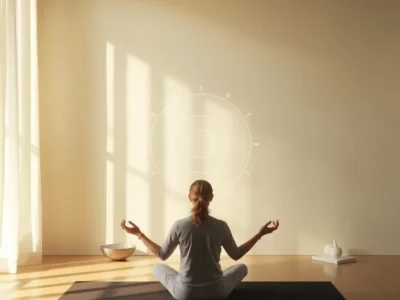
Energy healing at home is one of the gentlest ways to begin caring for your whole self. You do not need a practitioner, a special room, or expensive tools. Energy healing works with the body’s biofield, the subtle energy that surrounds and moves through you, to ease tension, clear heaviness, and support your natural sense of balance. In this guide I share seven beginner practices I return to again and again, plus how to weave them into a daily rhythm.
While advanced energy work benefits from a skilled practitioner, there is a wide range of simple practices that anyone can start at home. Each one below takes between five and fifteen minutes, and each one is something I have used myself and with the people I coach.
Why Energy Healing at Home Works Well for Beginners
Most of us carry energy that is scattered, rushed, or heavy by the end of an ordinary day. We hold stress in the shoulders, worry in the chest, and constant mental noise in the head. Energy healing practices invite you to slow down, feel what is happening in your body, and gently guide your attention toward release and renewal.
Practicing at home has real advantages. You can work at your own pace, in a space that feels safe, and at the moment you actually need it. Short, regular sessions also build a relationship with your own inner signals, which is the true foundation of any healing path. Over time you begin to notice when you are depleted before it turns into exhaustion.
Before You Begin: A Gentle Note
These practices are supportive tools for relaxation, self-awareness, and emotional balance. They are not a replacement for medical or mental health care. If you are living with persistent anxiety, depression, trauma, or any physical symptoms that worry you, please speak with a doctor or a qualified mental health professional, and let energy practices sit alongside that care rather than instead of it. If a practice ever feels overwhelming, stop, open your eyes, feel your feet on the floor, and take a few ordinary breaths.
Find a quiet corner, silence your phone, and drink a glass of water before you start. That is all the preparation you need.
1. Grounding: The Foundation of All Energy Work
Grounding, which means connecting your energy to the earth, is the most fundamental energy healing practice and the right starting point for every beginner. When you are ungrounded, energy tends to gather in the upper body and head, which can show up as racing thoughts, restlessness, and a sense of floating away from your life. Grounding returns energy to its natural flow and creates the stability from which all other energy work can safely proceed.
Practice: Stand or sit with bare feet on the floor or the earth. Take several slow, deep breaths. Visualise roots extending from the soles of your feet down through the floor, through layers of soil and stone, all the way to the earth’s core. With each exhale, send tension and anything you are ready to release down through the roots. With each inhale, draw up the earth’s steady, nourishing energy. Continue for five to ten minutes.
If grounding is especially helpful for you when your mind is racing, you will also like my article on grounding techniques for anxiety, which adds quick physical methods you can use anywhere.
2. EFT Tapping: Clearing Energetic Blocks
EFT, the Emotional Freedom Technique, combines gentle tapping on acupressure points with focused attention on a specific emotion, belief, or physical sensation. It is one of the most accessible tools available to beginners, and early research suggests it may help some people feel calmer, though it is best seen as a supportive practice rather than a treatment.
Practice: Choose something you want to work on, such as a worry, a limiting belief, or a knot of tension. Rate its intensity from 0 to 10. Tap the side of your hand (the karate chop point) while saying three times, “Even though I have this [problem], I deeply and completely accept myself.” Then tap through eight points: the top of the head, inner eyebrow, side of the eye, under the eye, under the nose, the chin, the collarbone, and under the arm. At each point repeat a short reminder phrase about the issue. After a few rounds, rate the intensity again. Many people notice a shift within one to three rounds.
3. Alternate Nostril Breathing for Balance
The breath is one of the most direct ways to shift your energetic state. Different breathing patterns influence the nervous system, and therefore how calm or alert you feel. Alternate nostril breathing, called Nadi Shodhana in yogic tradition, is a classic beginner practice for finding balance.
Practice: Sit comfortably with a tall spine. Close the right nostril with your right thumb and inhale slowly through the left. Close the left nostril with your ring finger, release the thumb, and exhale through the right. Inhale through the right, close it, and exhale through the left. That is one cycle. Continue for five minutes, keeping the breath smooth and unforced. In yogic teaching, this balances the two primary energy channels, the ida and pingala nadis, and many people simply feel clearer and more settled afterwards. If you feel lightheaded, return to normal breathing.
4. Light Visualisation for Clearing Your Energy Field
Visualisation uses the imagination as a bridge to the subtle body. It is gentle, free, and easy to do anywhere you can close your eyes for a few minutes.
Practice: Sit comfortably and close your eyes. Imagine a sphere of white or golden light above your head. As you inhale, draw this light down through the crown of your head and through your body, filling every cell with warmth. As you exhale, release anything dense or heavy out through the soles of your feet into the earth. Continue until the image shifts from effortful to natural. Even five minutes can change how you feel.
5. Hands-on-Heart Energy Practice
Our hands carry warmth and intention, and placing them on the body is one of the oldest forms of comfort. This practice borrows from the spirit of hands-on healing traditions and is deeply soothing when you feel stressed or emotionally raw.
Practice: Rub your palms together briskly for fifteen seconds until they feel warm. Rest one hand on your heart and the other on your belly. Breathe slowly and imagine warmth flowing from your palms into your body. You can silently repeat a kind phrase such as “I am safe in this moment.” Stay for five to ten minutes, letting your breathing soften. This simple gesture also pairs beautifully with the body-based approach described in my guide to somatic healing.
6. Humming and Sound Healing
Sound moves through the body as vibration, which is why a lullaby or a favourite song can change your whole mood. Humming is the simplest sound practice there is, and it needs no instruments.
Practice: Sit tall and take a deep breath in through the nose. On the exhale, hum at a comfortable pitch, feeling the vibration in your lips, face, throat, and chest. Repeat for two to five minutes. You may also play a singing bowl or soft instrumental music and simply listen, letting the sound wash through you. Many people find this a lovely way to release a heavy day.
7. A Cleansing Salt Bath
Water has long been used in cleansing rituals around the world. A warm salt bath is a restful way to let go of the day while holding the intention of releasing what no longer serves you.
Practice: Add a handful of sea salt or Epsom salt to a warm bath. Dim the lights, and as you settle in, set an intention such as “I release what is not mine to carry.” Breathe slowly and imagine tension dissolving into the water. When you finish, let the water drain away and visualise the heaviness leaving with it. If you cannot take a bath, a warm foot soak works beautifully. Please skip this one if you have skin conditions, are pregnant, or have been advised by a doctor to avoid hot baths.
Building a Daily Energy Healing Practice
You do not need to do all seven practices every day. Begin with grounding each morning, since it takes only five minutes and sets a steady foundation for the day. Then choose one more practice based on what you need right now: tapping when you feel worried, breathing when you feel scattered, hands-on-heart when you feel tender, and the salt bath when you need to unwind.
Consistency matters far more than intensity. Like physical fitness, energy work builds capacity through regular, gentle repetition. Pair your practice with an existing habit, such as your morning coffee or your evening wind-down, so it becomes automatic. If you enjoy working with the body’s energy centres, my beginner’s guide to chakra healing is a natural next step, and a regular meditation practice will deepen everything you learn here.
When You Want Extra Support
Home practice is powerful, yet sometimes we need a guide who can hold space and help us see what we cannot see alone. If you feel stuck, or you would like personalised support in building a practice that fits your life, you might enjoy reading about how life coaching works and what a session with me looks like.
Frequently Asked Questions About Energy Healing at Home
Can I practice energy healing at home without training?
Yes. The practices in this guide are designed for beginners and need no special training or tools. Start with short sessions, stay curious, and listen to your body. Advanced techniques, such as working on other people, are better learned from a qualified teacher. For your own self-care, simple grounding, breathing, and visualisation are perfectly suitable.
How often should I do energy healing practices?
Daily practice of five to ten minutes gives the best results for most people. Grounding each morning is a great anchor, with one additional practice as needed. Regular short sessions are far more effective than an occasional long one, because your nervous system and awareness build capacity through gentle, consistent repetition over time.
How will I know if energy healing is working?
Subtle shifts are common: feeling calmer, sleeping more easily, noticing tension release, or recovering from stress faster. Keeping a short journal helps you spot these changes. Results vary from person to person, and these practices are meant to support wellbeing, not to diagnose or treat any condition.
Can energy healing replace therapy or medical care?
No. Energy healing is a complementary practice for relaxation and self-awareness, and it should never replace professional medical or mental health care. If you are dealing with anxiety, depression, trauma, or physical symptoms, please consult a qualified professional and use these practices alongside that support.
Begin Where You Are
Energy healing at home is not about doing everything perfectly. It is about showing up for yourself with kindness, even for five quiet minutes. Choose one practice from this list today, and trust that small, steady acts of care add up to profound change. Begin where you are, with what you have, and let the process unfold.