If you’ve ever tried meditating and ended up thinking about your grocery list, you’re not doing it wrong. Almost everyone who starts a meditation practice feels like they’re failing at first. The good news? That restless, wandering mind is exactly what you’re working with — not against.
Starting a meditation practice for beginners doesn’t require silence, a yoga mat, or 30 free minutes. It requires about five minutes, a willingness to feel a little awkward, and the understanding that stillness is a skill — not a personality trait you’re born with.
This guide breaks it all down: what meditation actually is, how to start small, and how to make it a habit that sticks.
What Meditation Actually Is (And What It’s Not)
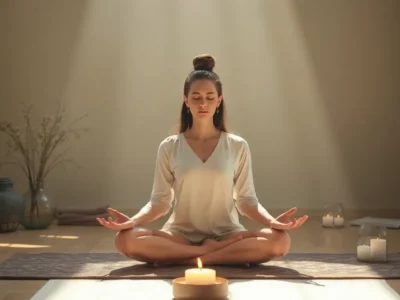
Most people picture meditation as sitting cross-legged in total silence with a perfectly empty mind. That image has scared off more beginners than anything else.
Meditation is simply the practice of directing your attention intentionally. It’s not about stopping your thoughts. It’s about noticing them without getting swept away. Think of your mind like a busy road. You’re not trying to stop traffic — you’re learning to sit on the curb and watch the cars go by without chasing them.
There are many styles: breath-focused meditation, body scan, loving-kindness, visualization, and guided meditation. For beginners, breath-focused or guided meditation are the easiest starting points.
Why a Meditation Practice for Beginners Matters More Than Ever
Chronic stress is no longer an occasional visitor. For many people, it’s a permanent roommate. Research from Harvard Medical School has found that meditation physically changes brain structure — increasing gray matter in areas related to self-awareness and reducing activity in the amygdala, the brain’s stress alarm.
The benefits show up fast, even with short sessions:
- Reduced anxiety and reactivity
- Better sleep quality
- Improved focus and clarity
- Greater emotional regulation
- A deeper sense of connection to yourself
You don’t need to meditate for an hour to feel these effects. Studies show that even 10 minutes daily produces measurable changes within eight weeks.
How to Start a Meditation Practice: Step-by-Step
Step 1: Choose a Time That Works Every Day
Consistency beats duration. Five minutes every morning is worth more than an hour once a week. Morning is the easiest time for most people — your phone hasn’t ambushed you yet, and the day hasn’t pulled you in twelve directions.
If mornings don’t work, try meditating right after a fixed habit — after brushing your teeth, after your first coffee, or just before bed. Attaching meditation to an existing routine removes the decision fatigue of “when do I do this?”
Step 2: Start With Just 5 Minutes
Five minutes feels too short. That’s why it works. When something feels manageable, you actually do it. You can always add time once the habit is established, but a 5-minute practice you do every day beats a 20-minute practice you skip most days.
Set a gentle timer so you’re not checking the clock. Use a tone that eases you out rather than jolting you back to reality.
Step 3: Find a Comfortable Position
You do not have to sit on the floor. Sit in a chair with your feet flat, lie down if back issues make floor sitting painful, or try a seated position on your bed with a pillow supporting your lower back.
The goal is alert relaxation — comfortable enough to stay still, but not so cozy that you fall asleep. Keep your spine gently upright. Close your eyes or soften your gaze downward.
Step 4: Anchor to Your Breath
Bring your attention to the physical sensation of breathing. Notice the air entering your nostrils — is it cool or warm? Feel your chest or belly rise and fall. You don’t need to control the breath, just observe it.
When thoughts come (and they will, constantly), gently note them without judgment — “thinking” — and return to the breath. Every return is a repetition, like a bicep curl for your attention. You’re not failing when your mind wanders. You’re succeeding every time you notice and come back.
Step 5: Use a Guided App for the First Month
For absolute beginners, guided meditation removes the pressure of “am I doing this right?” Apps like Insight Timer (free), Headspace, or Calm walk you through sessions with a real voice. They handle the structure so your only job is to listen and follow along.
After about 30 days, you’ll likely feel comfortable dropping the guide and meditating in silence.
Common Beginner Mistakes (and How to Avoid Them)
Mistake 1: Expecting a Blank Mind
A blank mind during meditation is a myth. Experienced meditators still have thoughts — they just don’t follow them down rabbit holes. Let go of the goal of emptiness. Aim for awareness instead.
Mistake 2: Giving Up After One Restless Session
Some sessions feel scattered and frustrating. That’s normal. The practice is in showing up again the next day. Consistency is what creates transformation, not any single “perfect” session.
Mistake 3: Meditating When You’re Already Exhausted
If you collapse into meditation right before sleep when you’re already depleted, you’ll often just fall asleep. That’s not bad — but it’s not the same as practicing awareness. Try to meditate when you have at least some mental energy available.
Mistake 4: Making It Too Complicated
You don’t need candles, incense, special cushions, or a perfectly quiet room. Silence helps, but it’s not required. People meditate on trains, in parked cars, and in noisy apartments. The environment matters far less than the intention.
How to Build Meditation Into Your Daily Routine
The secret to any lasting habit is reducing friction. Here’s how to make meditation easy to keep:
- Prepare the night before: Set your timer, open your app, choose your spot. Remove the morning decision-making.
- Stack it on an existing habit: Right after coffee, right after waking, right after exercise.
- Track it visually: Use a simple habit tracker or calendar. Don’t break the chain.
- Start with a 7-day commitment: Not a lifetime. Just seven days. Renew each week.
If you’re also working on related inner practices, pairing meditation with daily mindfulness habits creates a compounding effect on your mental clarity and emotional health.
What to Expect in Your First 30 Days
Week 1: It feels weird and forced. Your mind races. You check the timer constantly. That’s fine.
Week 2: You notice small moments of stillness. The breath becomes more familiar. Some sessions feel more settled.
Week 3: You start noticing the effects off the cushion — slightly more patient, slightly less reactive, slightly more present in conversations.
Week 4: The practice starts to feel like part of your identity rather than something you’re trying out. You notice when you miss a day.
By the end of the first month, most people describe meditation as something they “need” rather than something they “should” do. That shift in feeling is the real milestone.
Types of Meditation Worth Exploring After the Basics
Body Scan Meditation
A slow mental scan from head to toe, noticing sensations without judgment. Excellent for stress release and connecting with physical tension you’re holding unconsciously.
Loving-Kindness Meditation
Silently repeating phrases of goodwill toward yourself and others: “May I be happy. May I be well. May I be at peace.” Research shows this builds compassion and reduces self-critical thinking over time.
Visualization Meditation
Guiding your mind through a peaceful scene or a desired outcome. Visualization is also closely linked to manifestation work — if that interests you, exploring how the law of attraction works alongside visualization practice can deepen both.
Mantra Meditation
Repeating a word or phrase silently — “peace,” “I am enough,” or a traditional Sanskrit mantra — to anchor attention and shift internal state. Used in Transcendental Meditation and many spiritual traditions.
Final Thoughts: The Practice Is the Point
There’s no destination in meditation. There’s no level you reach where you’re “done.” The practice itself is the point — the daily act of returning to presence, of choosing awareness over autopilot.
Starting a meditation practice for beginners is one of the most powerful investments you can make in your mental, emotional, and even spiritual health. You don’t need to be ready. You don’t need the perfect setup. You just need five minutes and the willingness to begin.
Start today. Even right now, close your eyes and take three slow, conscious breaths. That’s it. That’s the beginning of everything.
For more tools to support your inner journey, explore how to find inner peace when stressed and how journaling supports spiritual growth.